
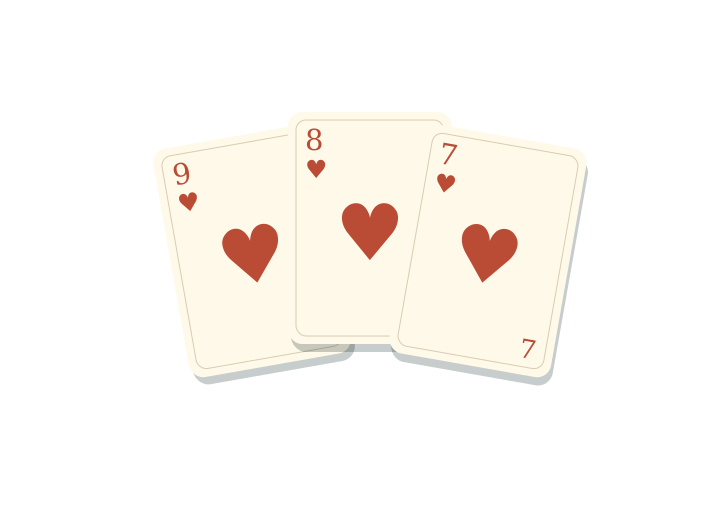
Cards and hands
| Term | Meaning | Example or caution |
|---|---|---|
| Trail / trio | Three cards of the same rank | 7♠ 7♥ 7♦ |
| Pure sequence / straight flush | Three consecutive ranks, same suit | 9♥ 8♥ 7♥ |
| Sequence / run | Three consecutive ranks, mixed suits | 9♠ 8♥ 7♣ |
| Colour / flush | Same suit, not a pure sequence | A♦ J♦ 7♦ |
| Pair | Two cards of the same rank | K♠ K♥ 4♦ |
| High card | No stronger category applies | A♣ J♥ 8♦ |
| Kicker | Remaining card used in a pair tie | 4 in a pair of Kings plus 4 |
Actions and table language
| Term | Meaning |
|---|---|
| Blind | Playing without looking at the cards |
| Seen / chaal | Playing after looking; wording varies |
| Pack / fold | Leave the current round |
| Show | Final hand comparison under table rules |
| Sideshow | A comparison request subject to eligibility and consent rules |
| Boot / ante | Initial table contribution in a ruleset; use no-value tokens for learning |
Download and Android language
An APK is an Android application package. A version name is a display label, while a version code is used as a technical release identifier. The package identifier names the installed application; the signing certificate helps establish update identity. A SHA-256 checksum fingerprints the file’s bytes.
“Old version”, “original” and “official” are claims in ordinary language, not Android security fields. Verify the evidence behind them in the APK safety guide.
Use a term in context
If you see “pure” in a hand description, check whether it means a same-suit sequence in that ruleset. If a support page mentions “clear data”, distinguish it from clearing a temporary cache. Similar-sounding terms can lead to very different actions. Read the rules guide for game context or Android troubleshooting for installation language.